
Why ‘La Bamba’ Can Last an Hour at a Mexican Fandango
NPR reports that “La Bamba” can last an hour at a Mexican fandango, a 300-year-old participatory tradition gaining attention worldwide.
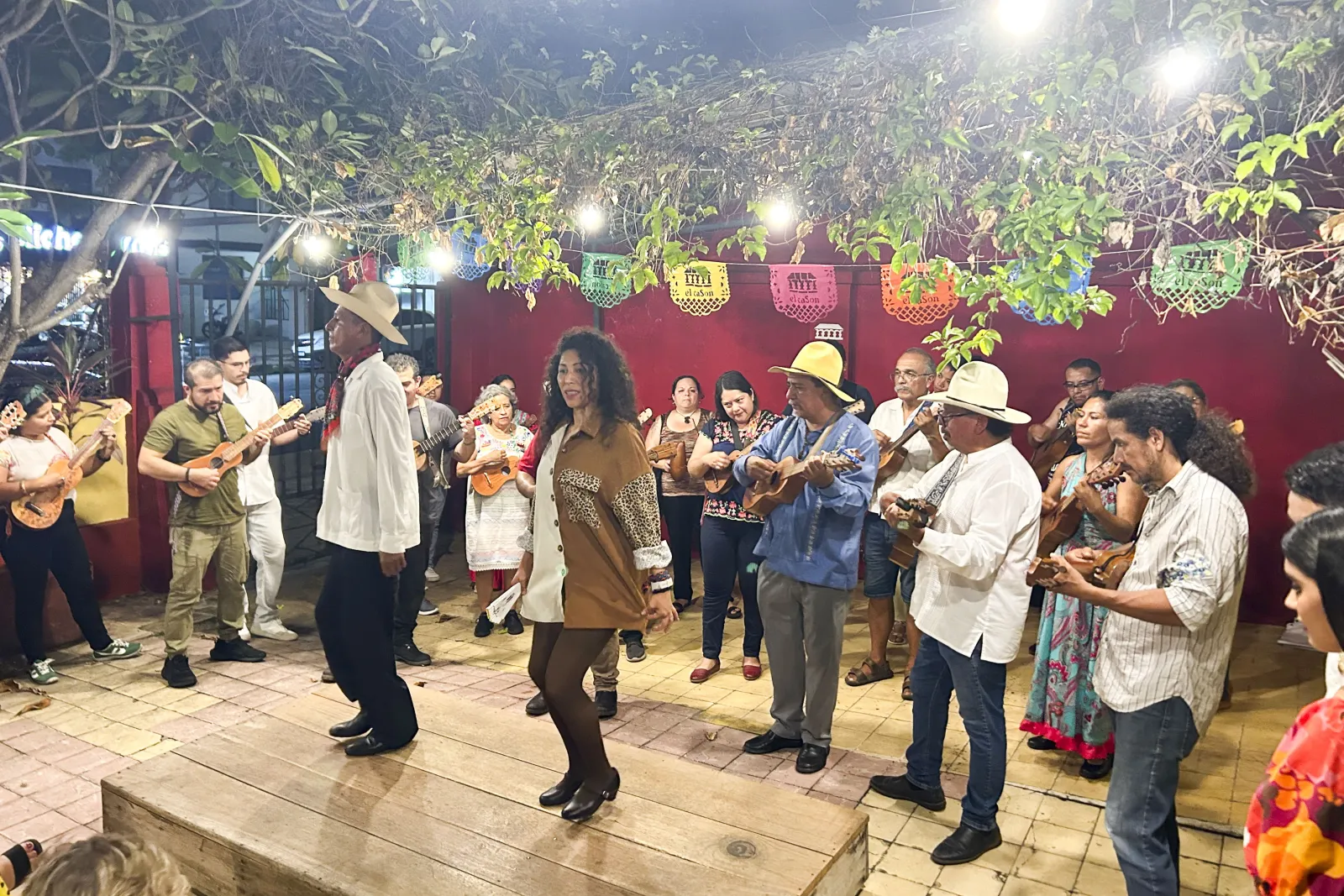
“La Bamba” may be familiar as a short recorded song, but a Mexican fandango can give it a very different life. NPR reports that the song may be played for an hour during these gatherings. The extended performance reflects a tradition where shared participation matters more than a fixed running time.
That context changes what listeners hear in the song. A long rendition is not simply an unusually stretched version of a recognizable tune. It belongs to a Mexican musical practice that NPR says has existed for about 300 years and is now finding new life around the world.
Mexican fandango puts music in a shared setting
NPR describes fandangos as sweaty, joyful gatherings that can continue through the night. The description places music within a social event rather than a conventional concert structure. Duration, repetition and the presence of other participants are part of the experience.
This distinction is useful for people who mainly know “La Bamba” through recordings. Recorded music often presents a song as a concise and completed object. A fandango presents music as something sustained in real time by a gathering.
Within that setting, an hour-long performance does not need to follow the expectations of radio or streaming formats. The song can remain central because the gathering has a different purpose. It supports collective energy over time instead of moving quickly from one finished track to another.
Why “La Bamba” can last an hour
For many listeners, the idea of playing one song for an hour may seem surprising. In the context described by NPR, however, the length signals that “La Bamba” functions within a broader communal practice. The song is part of an event, not merely an item on a setlist.
The report’s framing suggests that the experience cannot be understood only by measuring its length. A fandango makes time part of the music. The continuing performance helps create the atmosphere of an all-night gathering, where people remain involved rather than simply waiting for the next song.
This does not mean every listener will encounter fandango in the same way. NPR’s brief account does not establish how every gathering is organized, or how individual communities shape the practice. Those details should not be assumed from a single description.
Still, the central point is clear. A familiar song can take on a different role when it is performed inside a living cultural tradition. The length of “La Bamba” at a fandango reflects the gathering around it, including its pace, duration and communal focus.
A 300-year-old tradition reaching wider audiences
NPR says the Mexican fandango tradition is finding new life around the world. That renewed visibility matters because it directs attention beyond the best-known version of a song. “La Bamba” can be an entry point, but the fandango provides the cultural setting that gives a long performance its meaning.
International attention can help more people encounter the tradition. It can also encourage audiences to avoid treating a fandango as a novelty built around one famous title. The report identifies it as a long-standing Mexican musical practice with its own social character and history.
Recognition is especially important when audiences approach a tradition through a widely known song. Familiarity may make people curious, yet familiarity can also narrow their understanding. Hearing “La Bamba” in a fandango invites listeners to consider what recordings leave out: the time shared by participants and the collective energy of a gathering.
Listening beyond the recorded version
The value of the fandango is not captured by the fact that one song can last an hour. Its significance lies in the relationship between music, duration and community. NPR’s account shows that a centuries-old tradition can remain active by being practiced, gathered around and experienced with others.
For audiences discovering fandango through “La Bamba,” the useful question is not why the song takes so long. It is what the extended performance makes possible. In this setting, the song becomes part of a joyful, all-night event and a Mexican tradition now reaching listeners far beyond its original surroundings.
Sumber & Referensi
Referensi berikut digunakan sebagai konteks faktual. Artikel ditulis ulang secara editorial dan bukan salinan dari sumbernya.