
Mississippi Kratom Investigation: Father and Son Charged After Student Deaths
Two Mississippi smoke shop workers face drug charges after two Ole Miss students died. Authorities suspect kratom derivatives; causation remains unconfirmed.
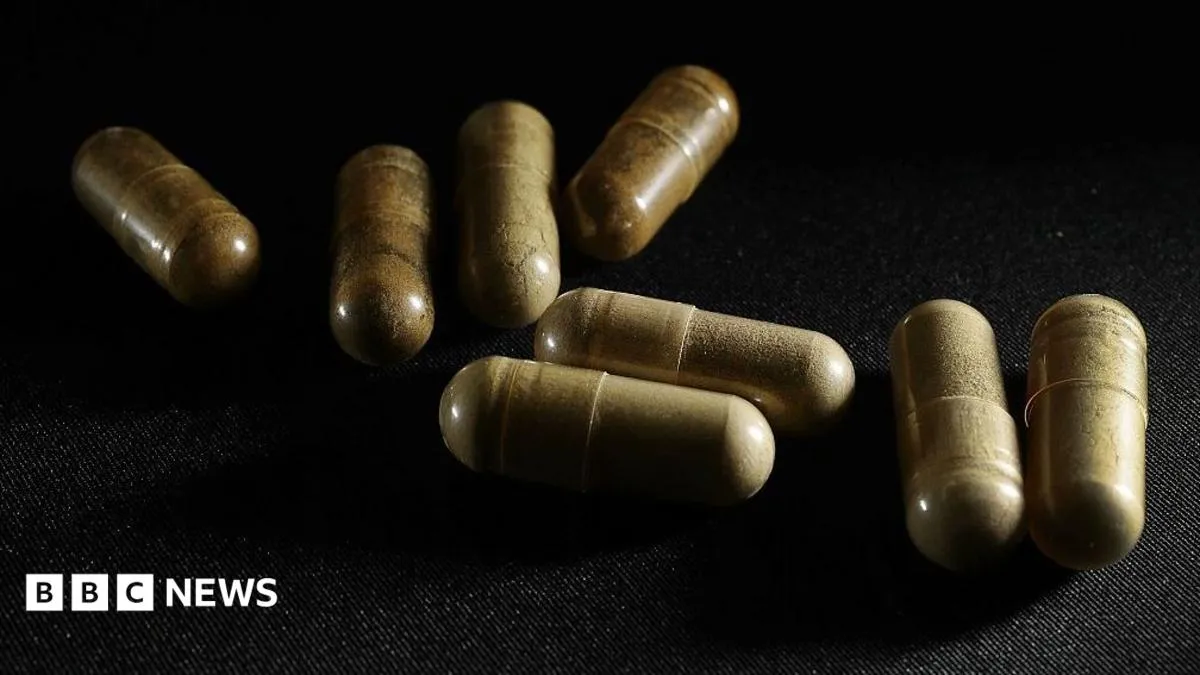
The federal case surrounding two University of Mississippi student deaths has produced drug charges, but it has not produced a confirmed medical finding that kratom killed either student. That distinction is central to the Mississippi kratom investigation. Prosecutors say products recovered during the inquiry led them to a local smoke shop and to two people who worked there.
The older defendant is Yahya Mohamed Mosleh, 51. His son, Islam Yahya Mosleh, 18, is charged in the same federal case over alleged possession of controlled substances intended for distribution.
The allegations concern suspected kratom derivatives. Natural kratom itself remains legal in Mississippi, while prosecutors say the particular derivatives identified in the case fall under federal controls.
Drug charges do not settle the cause of death
The criminal allegations and the unanswered medical questions need to be kept separate. Authorities have described circumstances that prompted suspected-overdose investigations, and packages linked to suspected kratom derivatives were recovered near both students. Yet the available reporting does not give a final cause-of-death determination tying either death to kratom.
That gap matters because finding a product near a person who has died can become part of an investigation, but proximity alone does not establish what was consumed, how much was consumed, or what ultimately caused the death. The source material also does not establish those consumption details for either student.
How investigators connected the two cases to a store
The sequence began on 21 September with the discovery of a dead Ole Miss student inside a dormitory room. Investigators viewed the circumstances as consistent with a possible overdose. They recovered packages believed to contain kratom derivatives, and some tablets were missing from the packaging.
Roughly an hour later, authorities encountered a second student death at another location. Suspected kratom-derivative packages were found in that case as well. The similarities between the discoveries became part of the inquiry, but they still did not amount to a medical conclusion about what caused either death.
Investigators then connected the packaging to a nearby retailer whose merchandise included beer, tobacco and vaping products. A search of the shop produced substances that authorities believed were controlled kratom derivatives. The Moslehs, who worked at the business, were arrested after that investigation.
The case against them remains an allegation. The reporting says the federal accusation concerns controlled substances allegedly held for distribution.
It should not be read as a judicial finding that either defendant caused the students’ deaths, nor as proof that a specific seized product was responsible for them.
Why the type of kratom product changes the legal picture
Kratom comes from a plant and can have opioid-like effects. Its use in the United States has grown over the last decade, and products marketed as kratom can be bought at retail counters as tablets or liquids. That broad retail category, however, does not mean every related compound has the same legal status.
Mississippi allows natural kratom. Prosecutors in this case point instead to derivatives they classify as controlled substances. Three compounds were specifically identified by prosecutors as federally controlled Schedule I substances: MGPI, MGM-15 and MGM-16. The distinction between the plant product and those derivatives is therefore essential to understanding why a shop associated with kratom products can become the focus of a federal drug prosecution.
Authorities also described the named derivatives as potentially far more potent than the plant’s natural leaf form, and more potent than morphine. That assertion applies to the compounds identified by prosecutors; it should not be generalized into a claim that every product sold as kratom has the same potency.
Labels can obscure what investigators are actually examining
The phrase “kratom derivative” covers less information than it may appear to. On its own, the label does not specify a product’s exact contents, concentration or legal classification. Likewise, availability at a retail counter does not establish that every ingredient in a product is lawful under federal controlled-substance rules.
Another label attached to the issue is “gas station heroin.” It has appeared in reporting and warnings, but it is colloquial rather than a precise name for the compounds at issue in the prosecution. Using it without explanation can blur the difference between natural kratom and the more potent substances prosecutors say they found.
What the Mississippi kratom investigation has established
The public record described in the available source supports several limited points: two students died within a short period; investigators recovered packages they suspected contained kratom derivatives; those packages were traced to a local shop; a search there led to additional suspected controlled substances; and two workers now face federal drug charges.
Separate questions remain unresolved. No final medical conclusion attributing either death to kratom appears in the available reporting. Nor does that reporting specify what substance or quantity each student may have consumed. Officials warned about consuming kratom following the deaths, but a public-safety warning is not the same thing as a completed toxicological or cause-of-death finding.
For that reason, the Mississippi kratom investigation is best understood as two overlapping matters rather than one settled conclusion: a federal controlled-substance case against the father and son, and an investigation into two student deaths whose medical causation remains unconfirmed in the available reporting.
Sumber & Referensi
Referensi berikut digunakan sebagai konteks faktual. Artikel ditulis ulang secara editorial dan bukan salinan dari sumbernya.