
Texas Journalist's Door Knock Triggers Police Call from Indian Family Amid H-1B Visas Abuse Claims
An Indian family in Plano, Texas, contacted police after journalist Sara Gonzales knocked on their door to report an allegation of H-1B visa abuse.
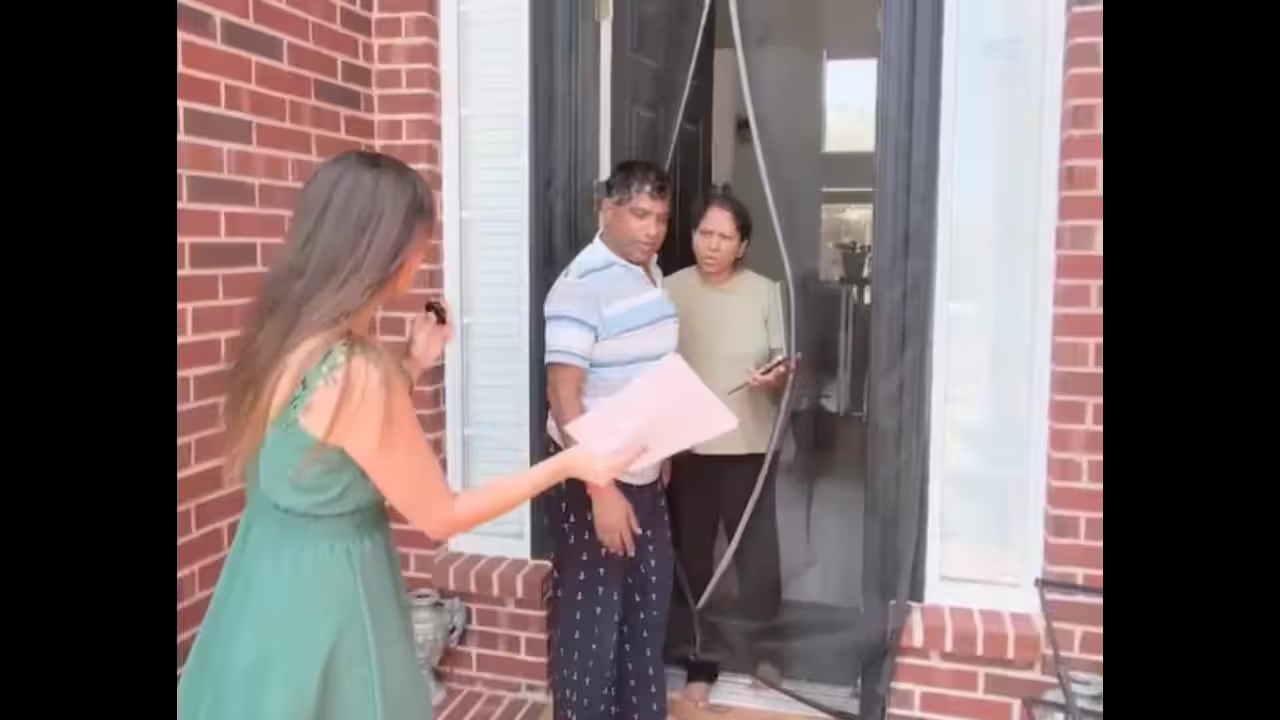
For an Indian family living in Plano, Texas, a routine doorbell chime quickly escalated into a crisis requiring law enforcement intervention. The visitors were not neighbors, but Sara Gonzales, a Texas journalist reporting on a suspected H-1B visa abuse case involving the household.
The family’s immediate response was to call the police. According to reporting by The Times of India, the incident resulted in a chilling exchange where the resident expressed their emotional state to the reporter: "I was terrified." This specific reaction underscores the profound fear that accompanies the threat of public scrutiny over immigration status.
The Legal Reality of H-1B Dependence
To understand why a journalistic visit would provoke such an intense safety response, one must look at the mechanics of the H-1B visa program. The system is designed to allow U.S. companies to hire foreign workers in specialty occupations. While beneficial for many, it creates a critical dependency: the legal status of the worker is often tied directly to their employer.
This structural dependence means that any public allegation of fraud or abuse by an employer carries immense weight. For the Plano family, the potential fallout of a published story detailing H-1B violations is not just reputational. It represents a direct threat to their legal existence in the United States. An unfounded allegation can trigger an internal immigration review, leading to deportation proceedings, the separation of family members, and the total collapse of the household's livelihood.
The journalist’s approach—knocking on a private residence to discuss a sensitive workplace violation—removed the subjects from the professional environment and placed them in their most vulnerable setting: home. For individuals with temporary legal status, the concept of a "private" conversation with a media figure discussing their immigration record is deeply destabilizing.
Media Tactics vs. Personal Security
The incident in Plano highlights a distinct tension between investigative journalism and the personal safety of vulnerable communities. While the First Amendment protects a reporter's right to gather news, the method of delivery has practical and psychological consequences for the targeted subjects. The family did not simply ignore the knock; they engaged with the reporter and then immediately involved law enforcement.
Calling the police was a calculated rational response, not a sign of guilt or an attempt to obstruct justice. The family’s primary objective was to establish a documented security boundary. In a context where an immigration officer, a lawyer, or a journalist can trigger a cascading legal process, the presence of police provides a immediate layer of protection against perceived physical and legal intrusion.
This reaction shifts the narrative away from a simple story about potential corporate malfeasance and back to the individual human cost. The "terror" expressed by the family is a documented fact of the encounter. It represents the lived reality for many in visa-dependent communities, where the boundary between public accountability and personal destruction is often nonexistent.
Impact on Immigrant Communities
The Plano incident serves as a microcosm of a larger debate regarding how media handles stories involving immigrant labor. The term "abuse," as used in the journalist's reporting, carries specific legal and social weight. Even if the underlying allegations are entirely substantiated and serve a clear public interest, the process of reporting them can cause immediate, unquantifiable harm to the individuals involved.
For communities reliant on employer-sponsored visas, news outlets must navigate a complex ethical landscape. The pursuit of transparency regarding corporate exploitation is vital. However, the human cost of that transparency is borne by the individuals whose legal status hangs by a thread. The involvement of police in this specific encounter demonstrates the severity of the fear these individuals face when their legal vulnerabilities are targeted by the press.
As immigration policies in the United States fluctuate, the stakes for H-1B holders continue to rise. This incident in Texas is a clear indicator that the impact of journalistic reporting on this demographic extends far beyond the print page or the screen. It directly touches the foundational security of the families involved, forcing them to seek physical protection from the authorities.
Sumber & Referensi
Referensi berikut digunakan sebagai konteks faktual. Artikel ditulis ulang secara editorial dan bukan salinan dari sumbernya.