
Pentagon Overhaul: Hegseth Cuts 20% of Top Military Leaders in Bid to Streamline Command
Defense Secretary Pete Hegseth has reduced senior military leadership by 20%, citing a need to eliminate bureaucracy and streamline operational command structures.
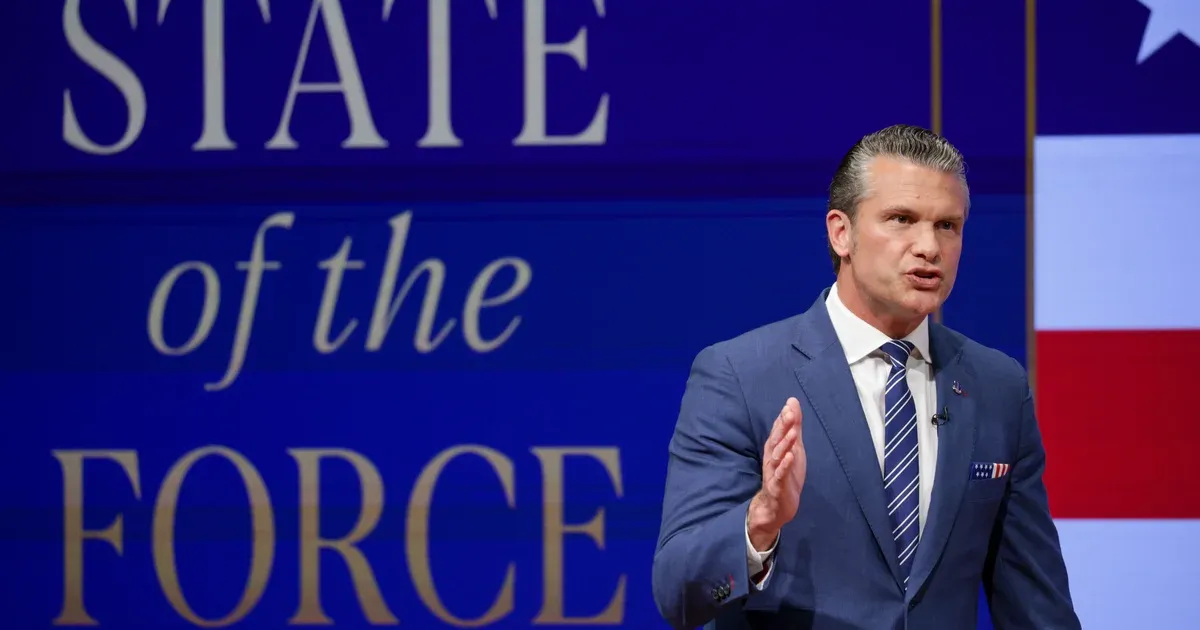
Defense Secretary Pete Hegseth has completed a sweeping reduction in the ranks of senior U.S. military leaders, eliminating approximately one in five generals and admirals. This significant shift in personnel structure marks a decisive move to alter the bureaucratic landscape of the Department of Defense under the current administration. The changes were detailed in a rare address to military personnel, signaling a fundamental break from prior operational norms.
The scope of the reduction is precise. Hegseth stated that the Pentagon has fired 10% of general and flag officers. Additionally, the department has cut the total number of available slots for these senior positions by another 10%. This combined 20% reduction represents a substantial contraction at the top levels of military command. Hegseth characterized this action not as a purge, but as a long-overdue instance of accountability.
A Shift in Institutional Culture
Hegseth’s rhetoric during the State of the Force Address emphasized a departure from what he termed the "woke department." He argued that the military must be unrelenting and uncompromising in its primary mission. The Secretary cited the removal of leaders who adhered to previous cultural standards or questioned civilian control as a necessary step. This cultural reset extends beyond mere personnel changes, targeting the underlying bureaucratic layers that have historically slowed decision-making processes within the Department of Defense.
The Secretary highlighted that the new operational philosophy prioritizes warrior ethos over administrative complexity. Hegseth noted that ideological elements are being replaced by leaders focused on operational effectiveness. This shift aligns with the administration’s broader goal of streamlining military leadership to ensure faster response times and clearer strategic objectives. The emphasis is placed on removing redundant structures that hinder the growth and effectiveness of service members.
Structural Changes and New Commands
Beyond personnel cuts, the Department of Defense is restructuring its command architecture. Hegseth announced the creation of the Autonomous Warfare Command. This new four-star combatant command is designed to integrate and scale autonomous and robotic capabilities across the joint force. The initiative represents a significant modernization effort, aiming to adapt the military to evolving technological landscapes and future conflict scenarios.
Additionally, the Pentagon is establishing new partnerships with five higher education institutions to create a distinguished military college corps. These universities include Louisiana State University, Liberty University, Tuskegee University, Mississippi State University, and Hillsdale College. Students in this new program will receive priority in officer commissioning. This move aims to cultivate a new pipeline of leaders aligned with the department’s revised strategic and cultural priorities, ensuring a steady flow of talent that fits the streamlined structure.
Debates Over Leadership Depth
The reduction in senior officers has sparked debate regarding the optimal balance between bureaucratic efficiency and strategic oversight. A Congressional Research Service report notes that while fewer top-level officers can accelerate decision-making, senior leaders are essential for managing complex international coalitions and technological transitions. Critics argue that eliminating experienced officers risks losing decades of accumulated institutional knowledge and diplomatic expertise. They contend that these leaders provide necessary guidance in navigating an increasingly complicated global defense environment.
Senator Mark Kelly of Arizona described the changes as a purge of the military’s best leaders. He emphasized that the individuals being removed possess significant experience and leadership capabilities that have historically served the armed forces well. Conversely, proponents of the reduction argue that the previous structure had become overly bloated. They maintain that trimming the ranks of general and flag officers is a necessary step to restore operational focus and remove layers of bureaucracy that impede the readiness of frontline troops.
The total number of active-duty generals and admirals stood at 851 as of July, just under the federal legal cap of 857. The administration’s directive to cut a minimum of 10% of flag and general officers, along with 20% of National Guard general officers, was first outlined in May. This strict adherence to quota ensures that the reduction is not merely selective but systemic. The outcome is a flatter command structure that theoretically allows for more direct communication and faster execution of strategic directives.
Implications for Military Operations
The immediate impact of these changes will be felt in the day-to-day operations of the U.S. military. With a smaller pool of senior officers, the remaining leaders will hold greater responsibility and visibility. The new Autonomous Warfare Command will require specialized oversight, a role now handled by a reduced cadre of experienced four-star generals. The partnership with private and public universities will shape the next generation of officers, instilling values that align with the current administration’s interpretation of military duty.
As the Department of Defense continues to implement these structural changes, the focus remains on what Hegseth described as "winning." The elimination of bureaucratic barriers is intended to free up resources and mental bandwidth for operational planning. While the long-term effects on military cohesion and international partnerships are yet to be fully understood, the direction is clear: a leaner, more agile command structure that prioritizes technological dominance and operational readiness over traditional administrative practices. The military enters this new phase with a significantly altered leadership roster, ready to execute a different strategic vision.
Sumber & Referensi
Referensi berikut digunakan sebagai konteks faktual. Artikel ditulis ulang secara editorial dan bukan salinan dari sumbernya.