
Iran President U.N. Address Draws Nuclear Red Line
Iranian President Masoud Pezeshkian tells the U.N. he rejects limits on civilian nuclear work while accusing the U.S. and Israel of lawless attacks.
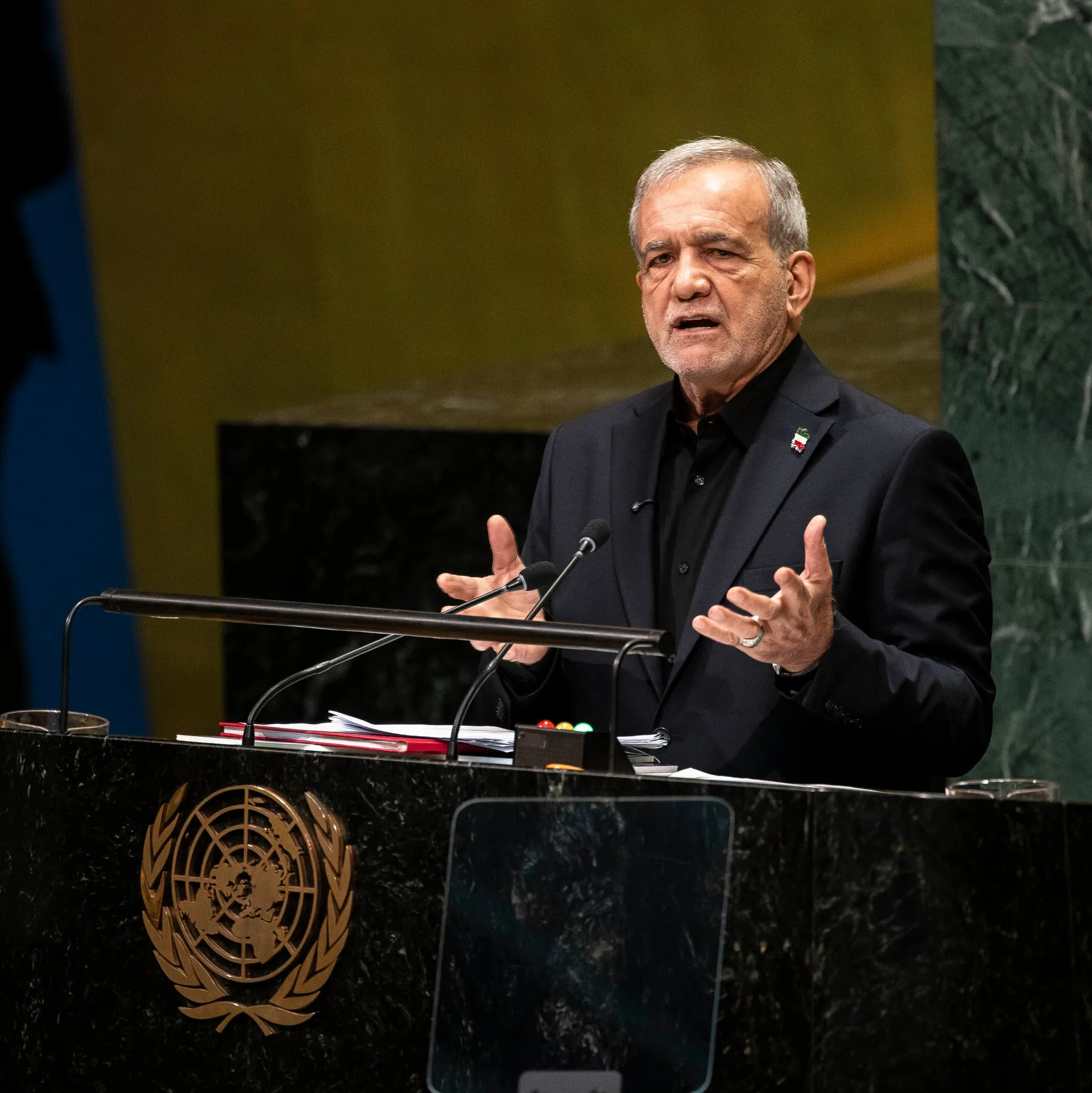
At the United Nations General Assembly on September 23, 2026, Iranian President Masoud Pezeshkian delivered a message of defiance that combined a threat with an offer. Addressing the world's diplomats in New York, he accused the United States and Israel of lawless attacks while stating that Tehran remained open to diplomacy. The one condition he placed on any future talks was absolute: Iran would never accept limits on its civilian nuclear program.
The address marked a high point in the annual gathering of world leaders, where bilateral tensions are often aired before a global audience. Pezeshkian's speech was not merely rhetorical posture. It signaled a clear boundary for Western negotiators, separating Tehran's willingness to engage from its non-negotiable priorities. While offering an olive branch through the word diplomacy, he simultaneously reinforced a hard red line that previous administrations have struggled to move.
Accusations of Lawless Attacks on Global Stage
Peesheshkian directed his sharpest criticism toward Washington and Tel Aviv, describing recent military actions against Iranian interests as lawless. By using this term, he framed the conflict not as a matter of security necessity but as a violation of international norms. This framing is a strategic choice, intended to rally support among non-aligned nations and to complicate Western legal justifications for force.
The choice of the United Nations as the venue amplified this message. General Assembly speeches are among the few moments where leaders of rival states face the same room without a working buffer of diplomats to mediate the language. It sets the tone for the rest of the week's meetings, forcing other delegates to pick sides or declare neutrality.
- The Accusation: Iran's president characterized U.S. and Israeli strikes as outside the bounds of lawful conduct.
- The Audience: The U.N. General Assembly provides a platform visible to the entire international community.
- The Timing: The address occurred during a week where multiple global crises were competing for diplomatic attention.
The Nuclear Red Line and the Offer of Talks
Central to the address was the distinction between Iran's civil nuclear ambitions and any constraints imposed by foreign powers. Pezeshkian stated that while negotiation was welcome, no agreement could place restrictions on the civilian nuclear program. This is a longstanding position for Tehran, but restating it this explicitly narrows the space for compromise.
For Western officials, the challenge is distinguishing between energy or medical nuclear work and weapons development. Iran's insistence that no limits apply to the civilian side challenges the traditional approach of linking enrichment levels to diplomatic concessions. It suggests that Tehran views its nuclear infrastructure as a sovereign right rather than a bargaining chip.
This creates a difficult environment for any mediator hoping to de-escalate tensions. If the core grievance of the West is nuclear proliferation and the core demand of Iran is unrestricted access to civilian technology, the overlap for a deal shrinks significantly. Pezeshkian's words indicate Tehran is prepared to continue negotiations, but without altering the fundamental direction of its program.
Parallel Pressure on Ukraine from Zelensky
Before Pezeshkian's speech later in the day, President Volodymyr Zelensky of Ukraine addressed his own crisis on the same stage. Zelensky called on allies to apply more pressure on Russia, highlighting how the General Assembly has become a hub for multiple, simultaneous geopolitical struggles.
The juxtaposition of the two addresses illustrates the fragmented nature of current international security. While diplomats debate the future of Iran's nuclear program, the war in Ukraine continues to demand resource allocation and political will from the same alliance network. Both speakers appealed to their respective allies for backing at a moment when resources and attention are finite.
Implications for Diplomatic Outlook
The combined effect of these speeches is a hardening of public postures on two different fronts. For observers watching from outside the chamber, the message is that the coming months will involve continued pressure rather than immediate breakthroughs. Iran's refusal to accept limits on its civilian program removes a potential lever for Western negotiators, while Zelensky's call for more pressure suggests the Ukraine war is entering a new phase of diplomatic intensity.
The United Nations remains one of the few channels where these lines are drawn out publicly, but public statements at the General Assembly rarely result in immediate policy shifts. The real test will be whether the rhetoric behind these speeches translates into private negotiations or further escalation in the months following the assembly. Until then, the international community watches as competing crises demand urgent solutions that remain out of reach.
Iran remains open to diplomacy, but would never accept limits on its civilian nuclear program.
Sumber & Referensi
Referensi berikut digunakan sebagai konteks faktual. Artikel ditulis ulang secara editorial dan bukan salinan dari sumbernya.