
Trump Reportedly Offered Xi Jinping the Chance to Buy US Weapons, Ambassador Says
The US ambassador to China says Donald Trump asked Xi Jinping if China wanted to buy American weapons. Here's why the claim matters for US-China policy and arms exports.
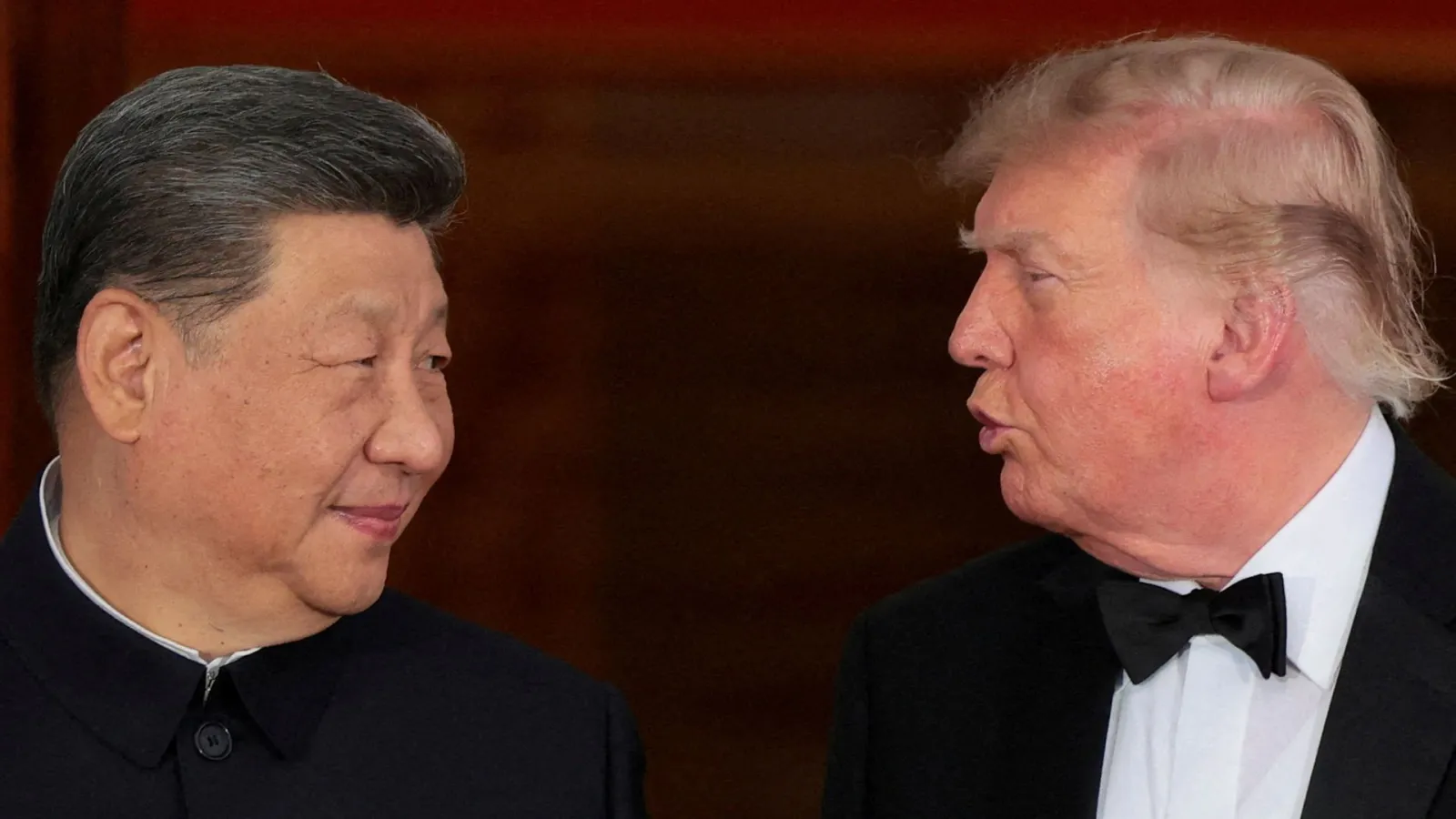
Donald Trump once asked Chinese President Xi Jinping whether China would be interested in buying American weapons, according to the US ambassador to China. The account, reported by Sky News, places a military-sales overture at the center of a diplomatic relationship that has long been defined by export restrictions rather than arms commerce.
The claim matters because Washington does not treat Beijing as a conventional arms customer. US export-control rules restrict the sale of many advanced weapons and sensitive technologies to China. An offer of the kind described would therefore sit awkwardly beside the legal and strategic framework that governs US defense trade.
What the ambassador said — and why the setting matters
The ambassador’s account describes a direct question from Trump to Xi about whether China wanted to purchase US weapons. The exchange is presented as a recalled conversation, not as a formal policy announcement or a signed agreement. That distinction shapes how the remark should be read.
Arms sales are a standard instrument of US foreign policy. Washington routinely uses them to deepen ties with allies and partners, while American defense contractors gain revenue from approved deals. Extending that model to China would break with decades of practice.
China is not a US treaty ally, and the two countries maintain no formal arms-deal framework. Military commerce between them is effectively blocked by export controls and by broader strategic competition. The reported question therefore points to an unusual diplomatic gesture rather than a routine transaction.
Why an arms offer to Beijing would be unusual
US weapons sales are governed by laws and regulations that screen buyers, end uses, and technology transfers. Advanced systems are typically reserved for close partners, and congressional notification requirements apply to major deals. China sits outside that circle.
For Beijing, buying American weapons would also carry political weight. China has built its own defense industry and has long criticized US arms sales to Taiwan. A Chinese purchase of US weapons would cut against that posture and against Beijing’s push for military self-reliance.
At the same time, the reported remark fits a pattern of Trump’s preference for transactional diplomacy. He has often framed alliances and partnerships through the lens of deals, costs, and benefits. A question about weapons purchases can be understood as an extension of that style, even if it never became policy.
Context: US-China tensions beyond weapons
The ambassador’s account surfaces amid wider debates over US-China economic decoupling, technology restrictions, and military posture in the Indo-Pacific. Washington has tightened controls on advanced semiconductors and other dual-use technologies, citing national security concerns.
Beijing has responded with its own countermeasures and has accelerated efforts to reduce dependence on US suppliers. In that environment, an arms-sales question — even a recalled one — touches on the most sensitive part of the relationship.
It also raises a practical question: what would such an offer even look like? Major US weapons systems require training, maintenance, spare parts, and long-term support. Those elements are difficult to reconcile with a relationship marked by distrust and export bans.
Verification limits and public reaction
Without contemporaneous records or independent confirmation, the claim remains unverified. The reporting attributes the account to the US ambassador to China, but it does not provide a transcript, date, or detailed setting for the conversation.
That gap does not make the remark irrelevant. Unconfirmed diplomatic anecdotes can still shape public debate, especially when they involve military commerce. They invite scrutiny of how senior officials describe past engagements and how those descriptions align with actual policy.
Former officials frequently revisit past interactions as historians, commentators, and political actors try to contextualize current tensions. By highlighting Trump’s reported question, the ambassador may be drawing attention to a more transactional approach to Beijing — one that contrasts with the more confrontational tone of recent years.
What to watch next
The immediate takeaway is not that China is buying US weapons. It is that a senior US diplomat has put a previously unreported arms-sales question into the public record. That alone could prompt questions about export-control policy and about how the US weighs commercial deals against security concerns.
For readers tracking US-China relations, the episode is a reminder that the relationship is not only about tariffs, chips, or military exercises. It also includes informal signals, recalled conversations, and the gray zone between diplomacy and dealmaking.
Whether the reported exchange ever led to anything remains unknown. What is clear is that the claim has entered the debate at a moment when Washington and Beijing are already testing each other’s limits on trade, technology, and security.
Sumber & Referensi
Referensi berikut digunakan sebagai konteks faktual. Artikel ditulis ulang secara editorial dan bukan salinan dari sumbernya.